Whole-Family Support: Why BHIS and Therapy Work Better Together
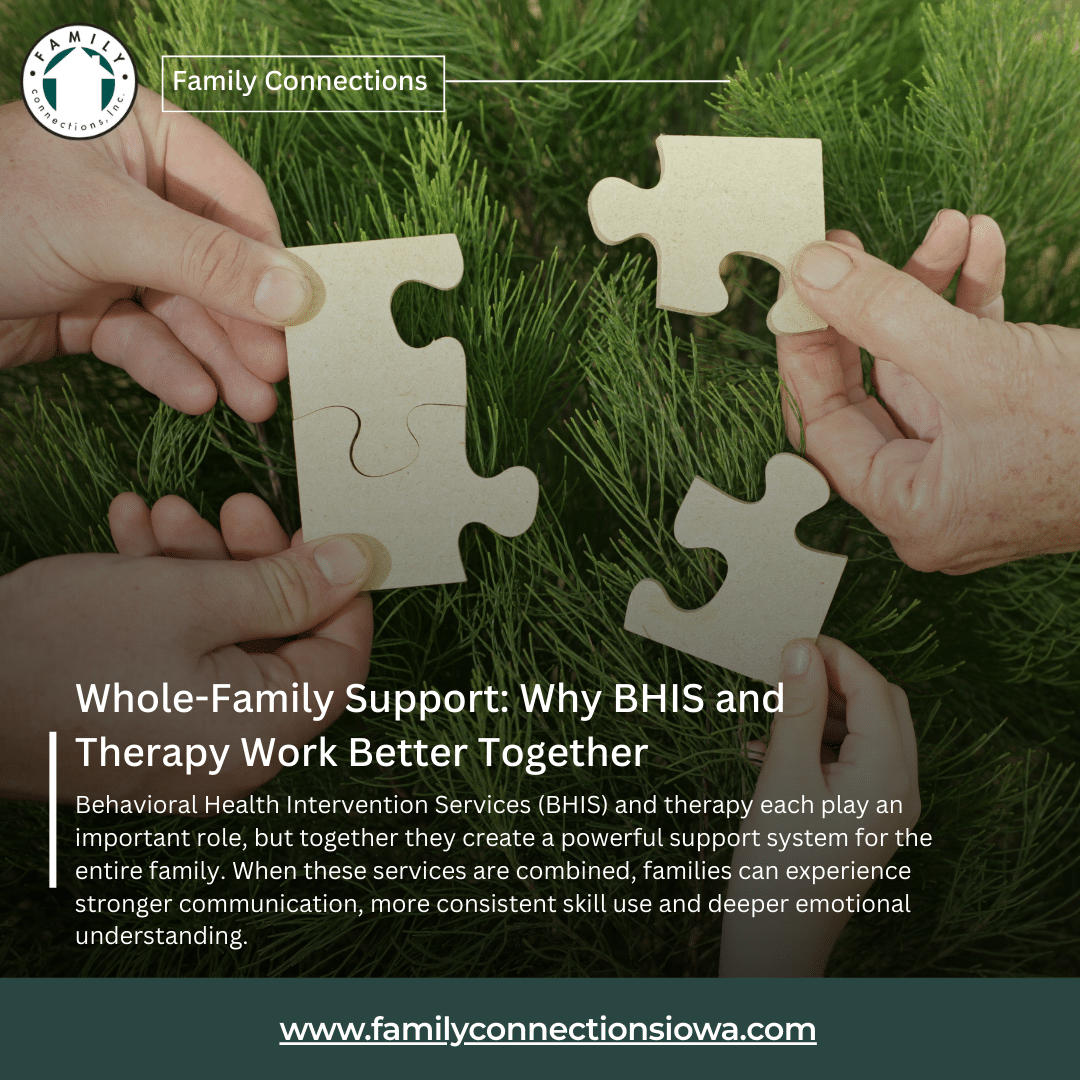
Behavioral Health Intervention Services (BHIS) and therapy each play an important role, but together they create a powerful support system for the entire family. Therapy focuses on emotional healing, insight and coping skills, while BHIS brings those skills into daily life through hands-on guidance, routines and real-world practice. When these services are combined, families experience stronger communication, more consistent skill use and deeper emotional understanding. This unified approach supports long-term growth and empowers both children and caregivers to navigate challenges with confidence.
How Therapy Supports Emotional and Mental Well-Being
Therapy provides a structured space for children and families to explore emotions, develop insight and process experiences with the support of a trained professional. Therapists help clients:
- Identify and express emotions
- Understand the connection between thoughts, feelings, and behaviors
- Build coping skills for stress, anxiety, anger and grief
- Strengthen communication and problem-solving abilities
- Heal from trauma, transitions and challenging experiences
Therapy creates the foundation for emotional health by helping children and caregivers understand why certain behaviors happen and what healthier responses might look like.
How BHIS Brings Those Skills Into Everyday Life
While therapy focuses on insight and emotional processing, BHIS helps families apply those skills where they’re needed most — at home, at school and in the community. BHIS providers work directly with children and caregivers to:
- Develop and practice routines
- Reinforce coping skills throughout the week
- Address behavior challenges as they occur
- Build social skills and emotional regulation
- Support parents in responding effectively to big emotions
- Strengthen consistency between home, school and therapy goals
This hands-on approach ensures that insights gained in therapy turn into real, sustainable changes in daily life.
Why These Services Are Strongest Together
When therapy and BHIS work side by side, families benefit from a high level of support that is both clinical and practical. Together, they offer:
1. Consistent Skill Building Across Settings
Skills learned in therapy — like deep breathing, identifying triggers or communication tools — are reinforced in BHIS through practice, modeling and repetition.
2. Stronger Family Communication
Therapists and BHIS workers collaborate to ensure parents feel supported and confident. This alignment reduces confusion and increases consistency for children.
3. Deeper Emotional Understanding
Therapy helps children understand what they feel and why they feel it, while BHIS helps them practice what to do with those feelings.
4. Support for Caregivers
Parents receive guidance on responding to challenging behaviors, setting boundaries and creating structure that supports their child’s unique needs.
5. Sustainable Progress
Combining both services can lead to longer-lasting improvements, as emotional awareness and behavioral skills grow together over time.
What Whole-Family Support Looks Like at Family Connections
At Family Connections, our providers work collaboratively to ensure each child and family receives the right level of support. Therapists, BHIS workers collaborate to create a consistent and connected treatment plan. Families are active partners in this process, helping shape goals and celebrate successes along the way.
This whole-family approach recognizes that children thrive when everyone around them feels informed, supported and empowered to grow.
Final Thoughts
BHIS and therapy each bring something valuable — but when they work together, they offer a complete circle of support that addresses emotional needs, daily routines and family dynamics. Whether a family is navigating behavior challenges, emotional regulation, school struggles or big life transitions, this combined approach can create meaningful, lasting change. At Family Connections, we are committed to walking alongside families as they build stronger communication, healthier habits and a more connected future.