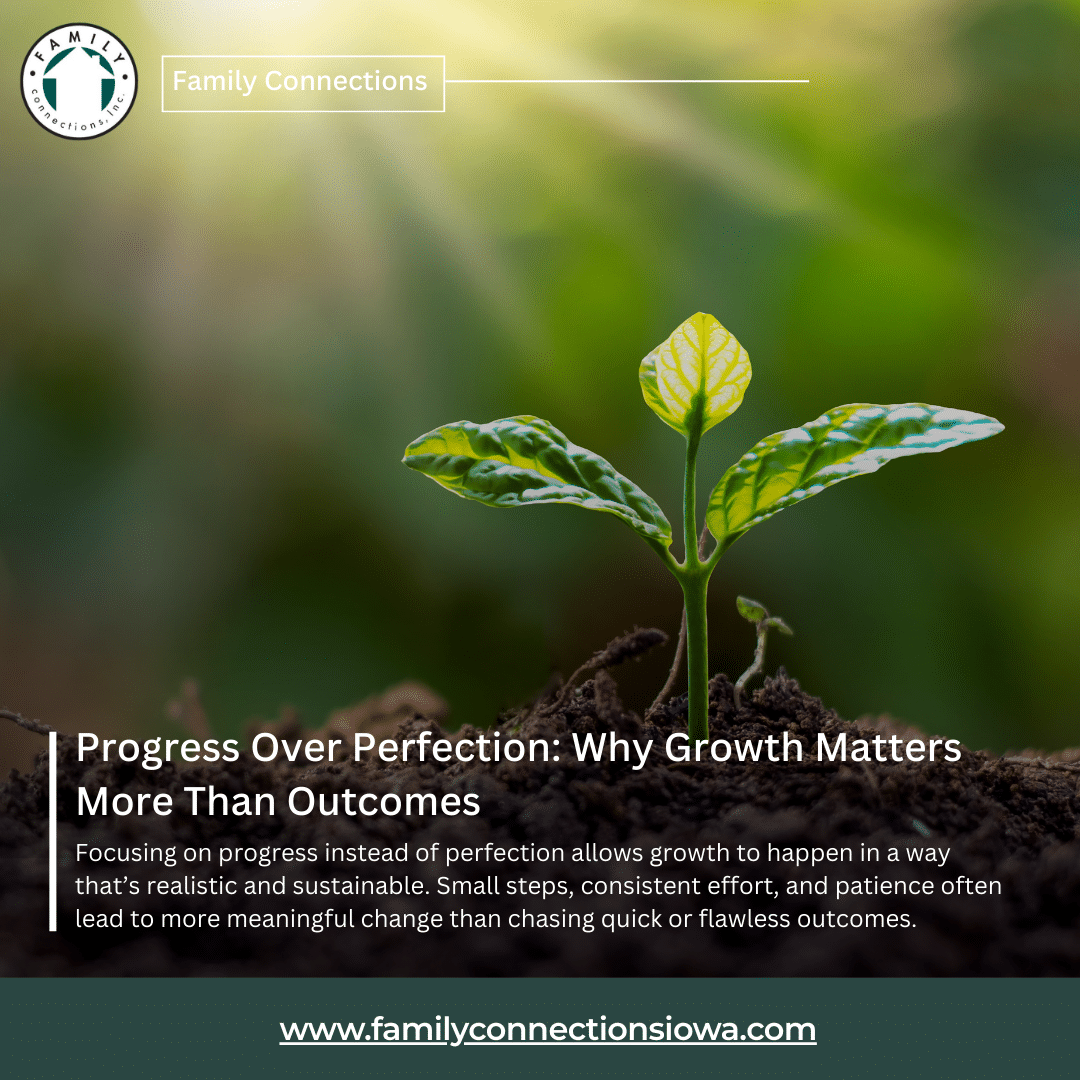
It’s common to measure progress by outcomes—how quickly something changes or whether a goal has been reached. Thoughts like “I should be better by now” or “Why am I still struggling?” can easily take over, especially when growth doesn’t look the way we expected. While outcomes can be helpful markers, they don’t always reflect the full picture of progress.
Growth is often quieter, slower and less obvious than we anticipate. Focusing on progress rather than perfection allows space for meaningful change that builds over time.
The Pressure of Outcome-Based Thinking
Outcome-based thinking focuses on end results: feeling “fixed,” reaching a goal quickly, or no longer struggling at all. When progress doesn’t happen on a clear timeline, this mindset can lead to frustration, self-criticism or the belief that efforts aren’t working.
This way of thinking can overlook important steps along the way—such as increased awareness, improved coping, or moments of resilience—that are signs of real growth.
What Progress Really Looks Like
Progress doesn’t always mean fewer hard days. It can look like recognizing emotions sooner, responding differently than before, or trying a coping skill even when it feels uncomfortable. Sometimes progress shows up as pausing before reacting, asking for help or showing up on a difficult day anyway.
These small changes matter. They create a foundation for long-term growth, even if the outcome isn’t immediately visible.
Why Small Changes Matter
Big changes are often built from small, consistent efforts. Practicing a new skill once may not feel impactful, but repetition over time creates familiarity and confidence. Each attempt—successful or not—adds to learning and growth.
Consistency matters more than perfection. Showing up regularly, trying again after setbacks and continuing to put in effort are often more powerful than quick fixes.
Letting Go of the “Shoulds”
Thoughts like “I should be further along” or “I shouldn’t still feel this way” can increase pressure and reduce motivation. Shifting away from these expectations allows growth to happen at a realistic pace.
Progress is not linear. Setbacks don’t erase growth, they are often part of the process.
Growth Over Time
When progress becomes the focus, growth is measured by effort, awareness, and persistence rather than outcomes alone. This mindset encourages patience, self-compassion and trust in the process.
Over time, these small steps add up to meaningful change that lasts beyond quick solutions.
Moving Forward
Growth doesn’t require perfection. It requires consistency, patience, and the willingness to keep going—even when progress feels slow. By focusing on effort instead of outcomes, growth becomes more sustainable and achievable.
If you or someone you care about is looking for support, Family Connections is here to help.