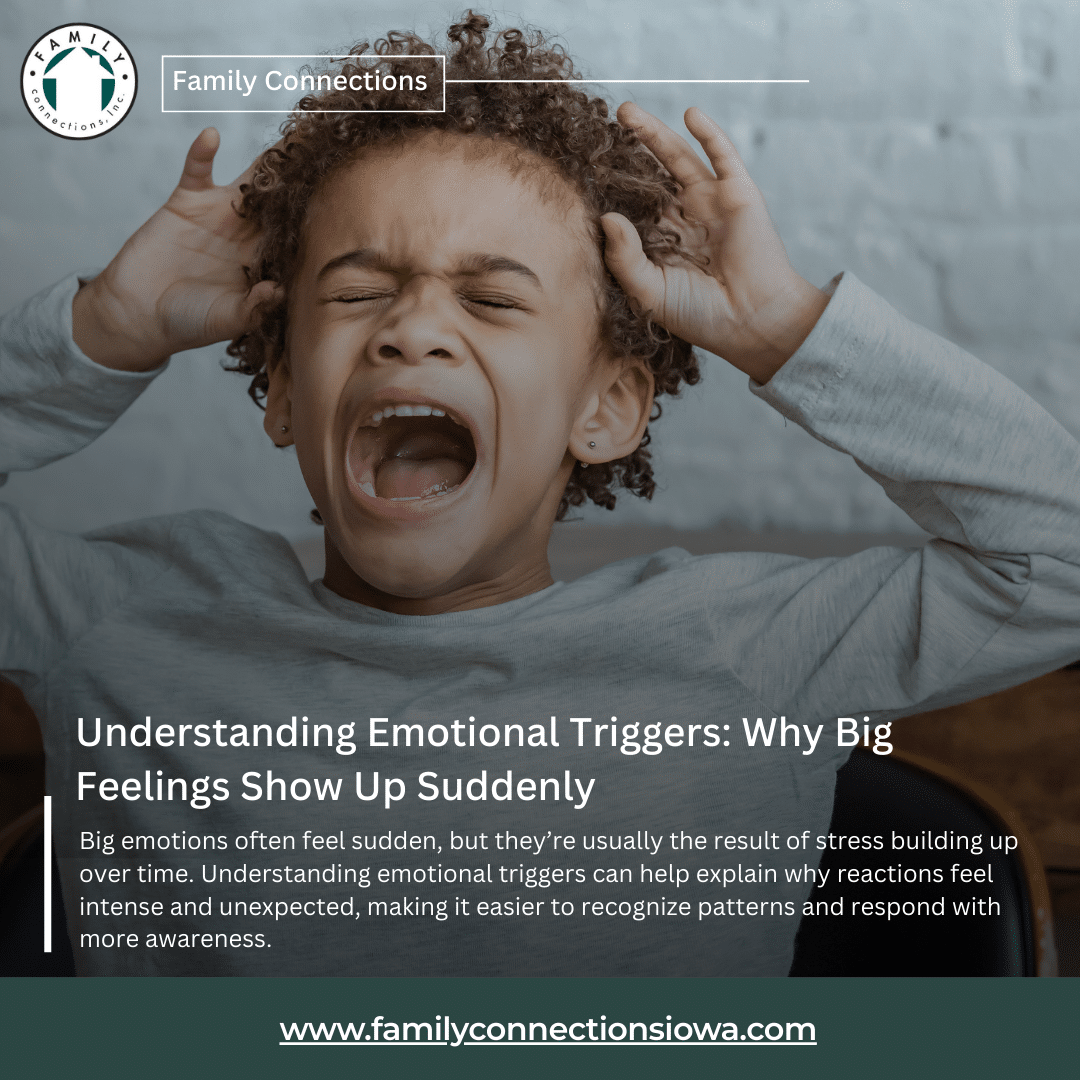
Have you ever felt like a big emotional reaction came out of nowhere? One small moment turns into overwhelming frustration, sadness or anger and it’s hard to understand why. While emotions can feel sudden, they’re often connected to stress that has been building over time.
Understanding emotional triggers can help explain these reactions and make emotions feel less confusing and more manageable.
What Are Emotional Triggers?
Emotional triggers are situations, thoughts, or experiences that bring up strong emotional reactions. Triggers are often connected to past experiences, unmet needs or ongoing stress. When a trigger is activated, the emotional response may feel intense—even if the situation itself seems small.
Triggers don’t mean someone is overreacting. They’re a sign that something deeper is being activated.
How Stress Builds Over Time
Stress doesn’t always show up all at once. It often builds quietly through daily pressures, responsibilities and emotional experiences. When stress accumulates without enough support or release, the body and mind become more sensitive.
At that point, even a small challenge can feel overwhelming because it’s added to everything else already being carried.
Why Reactions Can Feel “Out of Nowhere”
When emotions have been building beneath the surface, reactions may appear sudden. In reality, the response is often the result of many small stressors adding up over time.
Recognizing this can help reduce self-blame and increase understanding of emotional responses.
Examples Across Different Ages
For children, triggers may show up as meltdowns, shutting down or sudden changes in behavior. These reactions can be connected to things like transitions, sensory overload or difficulty expressing emotions.
For teens, emotional triggers may appear as irritability, withdrawal or strong reactions to peer interactions. Academic pressure, social stress and identity development can all contribute to emotional buildup.
For adults, triggers often show up during moments of overwhelm, conflict or feeling unsupported. Responsibilities, work stress and unresolved emotions can make reactions feel sudden or confusing.
Identifying Triggers Builds Awareness
Learning to identify emotional triggers helps make sense of reactions. When triggers are recognized, emotions feel less unpredictable and more understandable.
Emotional awareness allows individuals to pause, reflect and choose responses rather than reacting automatically.
How Therapy and BHIS Can Help
Therapy and Behavioral Health Intervention Services (BHIS) support individuals in identifying emotional triggers and understanding how stress impacts behavior. Through skill-building, emotional awareness and consistent support, individuals learn healthier ways to cope with big feelings.
Over time, this support helps reduce emotional overwhelm and builds confidence in managing emotions more effectively.
Moving Forward With Understanding
Big emotions don’t come out of nowhere—they often have a story behind them. By understanding emotional triggers and recognizing how stress builds over time, individuals can develop greater awareness, compassion and control over their emotional responses.
If you or someone you care about is looking for support in managing emotions, Family Connections is here to help.