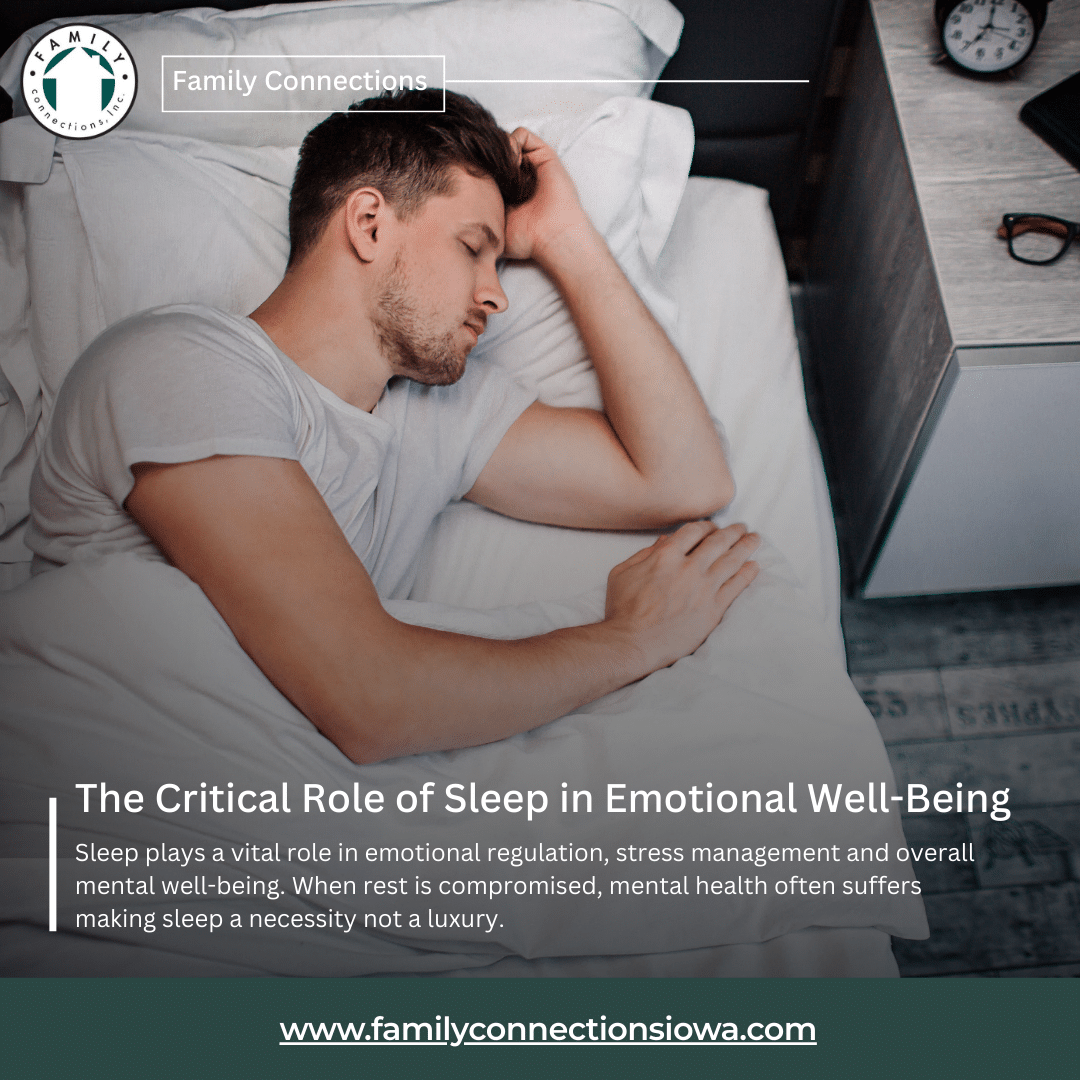
Sleep is often the first thing sacrificed when life gets busy. Between work, school, family responsibilities and stress, rest can feel negotiable. However, sleep is not optional — it is a foundational part of mental health and emotional stability.
When we sleep, the brain is doing essential work. Sleep supports emotional regulation, memory processing, problem-solving, and resilience. Without enough rest, the brain has a harder time managing emotions, which can lead to increased irritability, anxiety, low mood and difficulty coping with daily stressors.
Lack of sleep is closely connected to mental health concerns such as depression, anxiety, ADHD and mood disorders. Poor sleep can intensify symptoms making coping strategies harder to use and reduce motivation. For children and adolescents, inadequate sleep can also impact behavior, emotional outbursts, attention and school performance.
Sleep and mental health have a two-way relationship. Mental health challenges can make it harder to fall or stay asleep, while poor sleep can worsen mental health symptoms. This cycle can feel overwhelming, but addressing sleep habits is often a meaningful first step toward improved emotional well-being.
Healthy Sleep Tips to Support Mental Health
- Stick to a consistent sleep schedule. Going to bed and waking up at the same time each day — even on weekends — helps regulate your body’s internal clock and improves overall sleep quality.
- Create a calming bedtime routine. Engaging in relaxing activities such as reading, stretching, journaling, or deep breathing signals to your brain that it’s time to wind down and prepare for rest.
- Limit screen time before bed. Blue light from phones, tablets, and TVs can interfere with melatonin production, making it harder to fall asleep. Aim to power down screens at least 30–60 minutes before bedtime.
- Make your sleep environment comfortable. A dark, quiet, and cool room supports deeper sleep. Using blackout curtains, white noise or a fan can help create a more restful space.
- Be mindful of daytime habits. Caffeine late in the day, irregular naps and lack of physical activity can impact nighttime sleep. Staying active during the day and limiting stimulants can support better rest at night.
Healthy sleep doesn’t mean perfection — it means consistency. Small, realistic changes in daily routines can lead to meaningful improvements in mood, focus and emotional regulation over time.
If sleep concerns are ongoing or begin to interfere with daily functioning, it may be helpful to seek additional support. Therapy can help identify underlying stressors, develop coping strategies and establish routines that support both rest and mental health.
At Family Connections, we understand that mental health is deeply connected to daily habits like sleep. If you or a loved one are struggling with sleep, stress, or emotional well-being, our team is here to help. Reach out to Family Connections to learn more about our therapy, BHIS and medication management services and how we can support you.