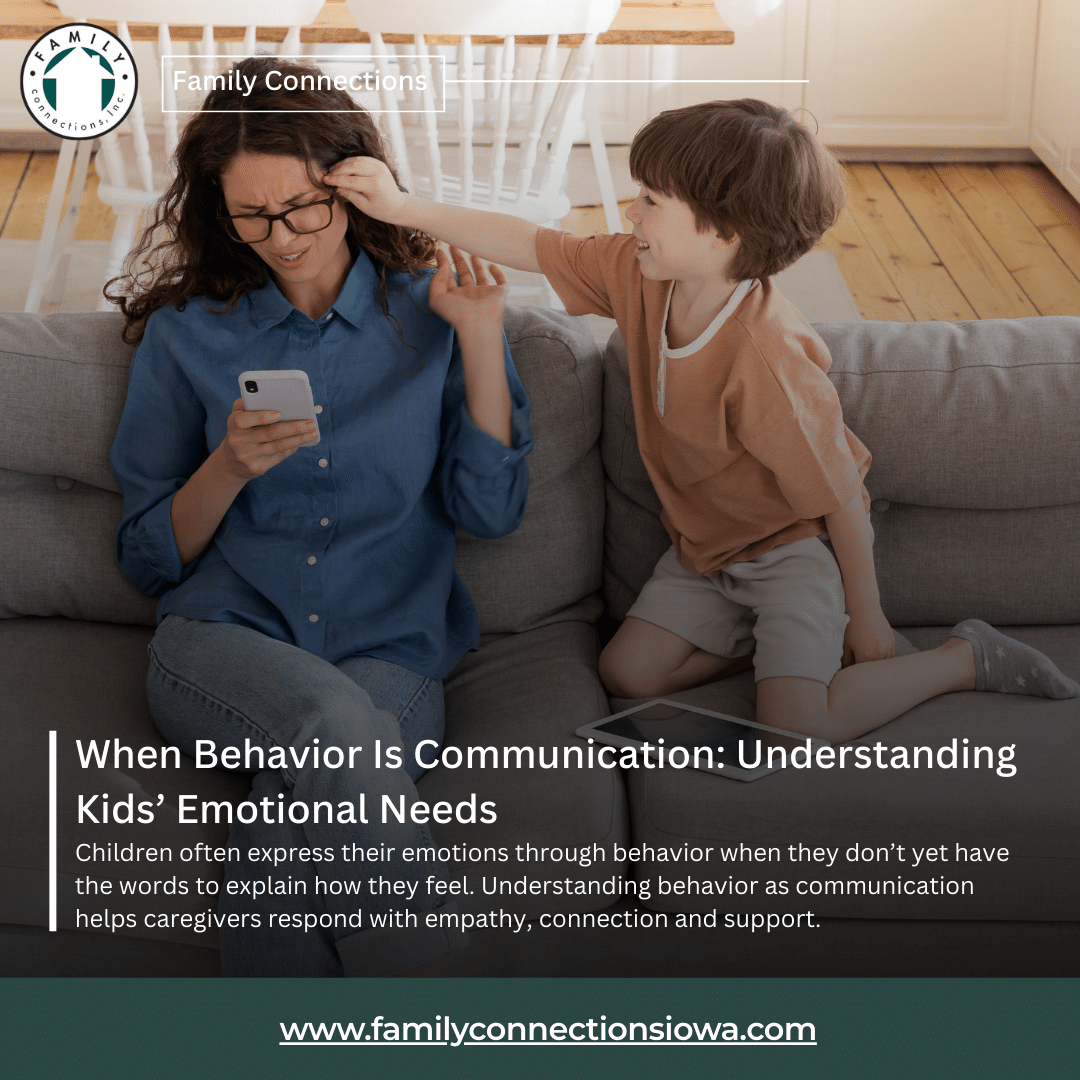
Children don’t always have the language or emotional awareness to clearly express what they’re feeling. Instead, their emotions often show up through behavior. Tantrums, withdrawal, defiance or sudden changes in mood are not simply “bad behavior” — they are often a child’s way of communicating unmet needs, overwhelming emotions or stress.
When behavior is viewed only as something to correct, important messages can be missed. A child who is acting out may be feeling anxious, frustrated, tired, overstimulated or unsure how to ask for help. Similarly, a child who shuts down or avoids interaction may be experiencing sadness, fear or emotional overload. Behavior is often the outward signal of an internal experience.
Understanding behavior as communication allows adults to shift from asking, “How do I stop this behavior?” to “What is my child trying to tell me?” This mindset creates space for empathy and problem-solving rather than punishment alone. When children feel understood and supported, they are more likely to learn healthier ways to express their needs.
Children’s emotional regulation skills are still developing. They rely on adults to help them name emotions, calm their bodies, and learn appropriate coping strategies. Consistent, supportive responses from caregivers help children feel safe and teach them that their feelings are valid — even when certain behaviors need redirection.
Ways to Respond When Behavior Is Communication
- Pause and observe before reacting. Take a moment to notice patterns in the behavior, including when it occurs, what happened beforehand, and what the child may be feeling in that moment.
- Name the emotion you see. Helping children label feelings such as anger, sadness, frustration, or worry builds emotional awareness and reduces the need to communicate through behavior alone.
- Validate feelings while setting boundaries. It is possible to acknowledge emotions while still holding limits, such as “I see you’re really upset, and it’s not okay to hit.”
- Teach coping and communication skills. Modeling deep breathing, taking breaks, using words, or asking for help gives children tools to use instead of acting out.
- Focus on connection first. Children are more receptive to guidance when they feel safe, heard, and supported. Repairing connection after difficult moments builds trust and emotional security.
When adults consistently respond with curiosity and compassion, children learn that their feelings matter and that there are safe ways to express them. Over time, this approach supports emotional regulation, stronger relationships and healthier behavior patterns.
If behavioral concerns feel overwhelming or begin to interfere with daily life, additional support can be helpful. Therapy and skill-building services can support children and caregivers in understanding emotional needs, strengthening communication and developing effective coping strategies.
At Family Connections, we believe that behavior is a form of communication and that every child deserves to feel understood. If your child is struggling emotionally or behaviorally, reach out to Family Connections to learn more about our therapy, BHIS and medication management services and how we can support your family.