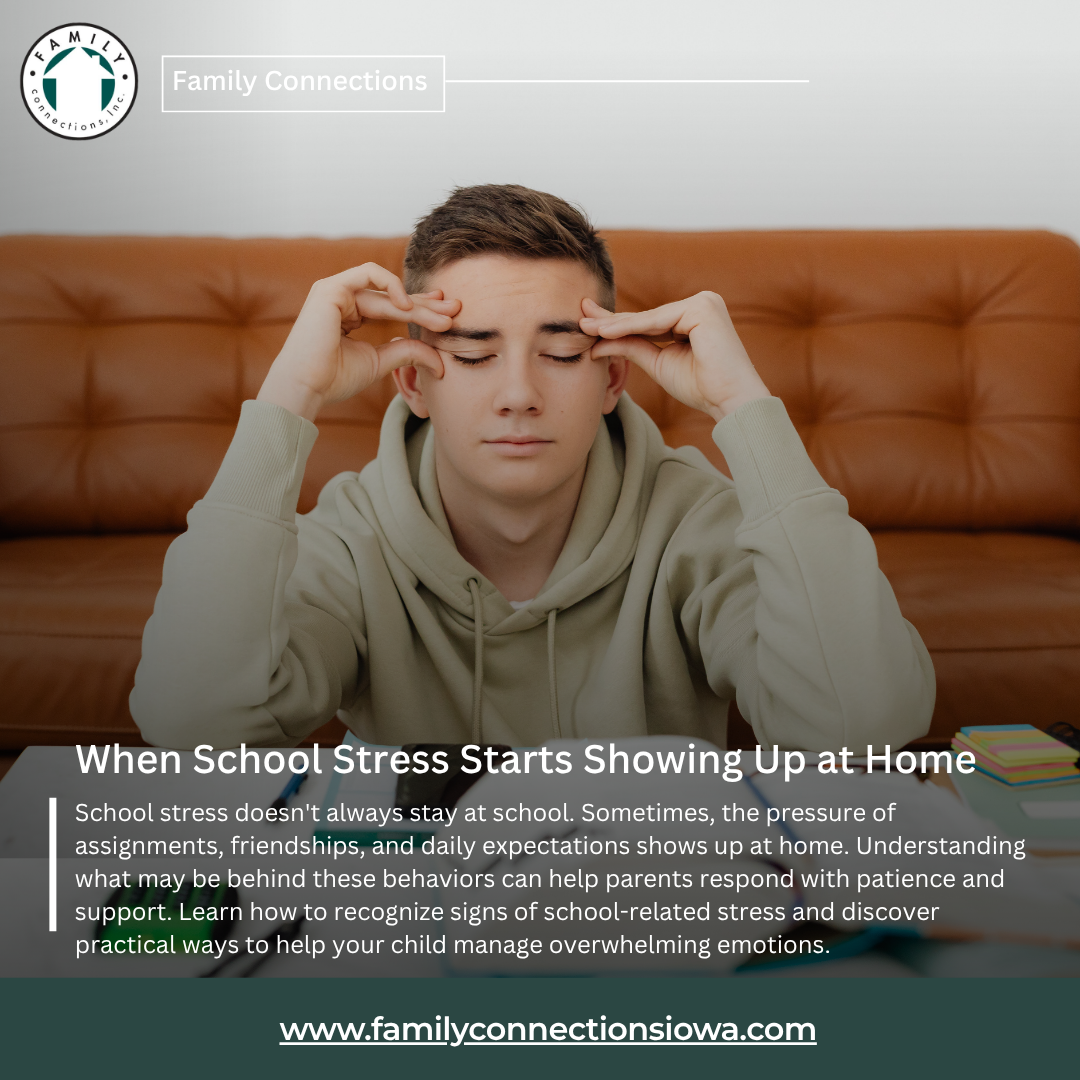
Understanding How School Stress Affects Children
For children and teenagers, school involves much more than academics. Throughout the day, students navigate friendships, manage expectations, follow directions, and work through challenges. While these experiences support growth, they can also become overwhelming.
By the time children return home, they may feel mentally and emotionally exhausted. Parents might notice increased frustration, difficulty following instructions, or a desire to spend more time alone.
Although these behaviors can be challenging, they may indicate that a child is struggling to manage stress rather than intentionally being difficult.
Recognizing the Signs of School-Related Stress
Children do not always communicate their stress directly. Instead, it may appear through changes in behavior, emotions, or routines.
Common signs include:
- Increased irritability: Becoming frustrated more easily or reacting strongly to minor situations.
- Emotional outbursts: Crying, yelling, or becoming upset over everyday challenges.
- Withdrawal: Spending more time alone or losing interest in family activities.
- Physical complaints: Frequent headaches, stomachaches, or unexplained fatigue.
- Changes in sleep: Difficulty falling asleep or waking up in the morning.
- School avoidance: Expressing reluctance or distress about attending school.
While occasional changes in behavior are normal, persistent difficulties may indicate that additional support is needed.
Why Children Sometimes Struggle More at Home
Parents may wonder why their child appears to manage emotions successfully at school but becomes easily upset at home.
Children often spend considerable energy regulating their emotions, maintaining attention, and meeting expectations throughout the school day. When they return home, they may have fewer emotional resources available.
Home may also be where children feel most comfortable expressing feelings they have been holding in.
Understanding this possibility can help parents look beyond the behavior and consider what their child may be experiencing.
Practical Ways Parents Can Help
1. Allow Time to Decompress
After school, some children benefit from having time to relax before transitioning into homework or other responsibilities. Activities such as drawing, listening to music, or spending time outdoors can help children recharge.
2. Encourage Open Communication
Ask questions such as “What was the hardest part of your day?” or “Was there anything that made you feel frustrated?”
Listen without immediately offering solutions. Sometimes, children need to feel understood before they are ready to problem-solve.
3. Validate Feelings While Maintaining Expectations
Acknowledging emotions does not mean accepting every behavior.
For example, a parent might say, “I understand you’re frustrated about homework. It’s okay to feel frustrated, but we still need to find a way to complete it.”
This helps children understand that their emotions are valid while learning appropriate ways to respond.
4. Break Tasks Into Smaller Steps
Large assignments can feel overwhelming. Helping children divide tasks into manageable steps, with short breaks when appropriate, can reduce frustration and build confidence.
5. Communicate With School Staff
Teachers and school staff may provide insight into academic difficulties, peer relationships, or changes in classroom behavior. Collaboration can help families develop consistent strategies to support their child.
When Additional Support May Be Helpful
If a child regularly experiences intense emotional outbursts, persistent school avoidance, significant mood changes, or difficulty functioning at home or school, professional support may be beneficial.
Mental health professionals can help children develop emotional regulation skills, identify stressors, and strengthen healthy coping strategies.
Final Thoughts
School stress does not always end when the school day is over. Recognizing signs of stress, encouraging communication, and providing opportunities for emotional regulation can help children feel understood and supported.
At Family Connections, Inc., we understand that children and families experience a variety of emotional and behavioral challenges. Our mental health services help individuals develop coping skills, strengthen relationships, and navigate life’s challenges with greater confidence.