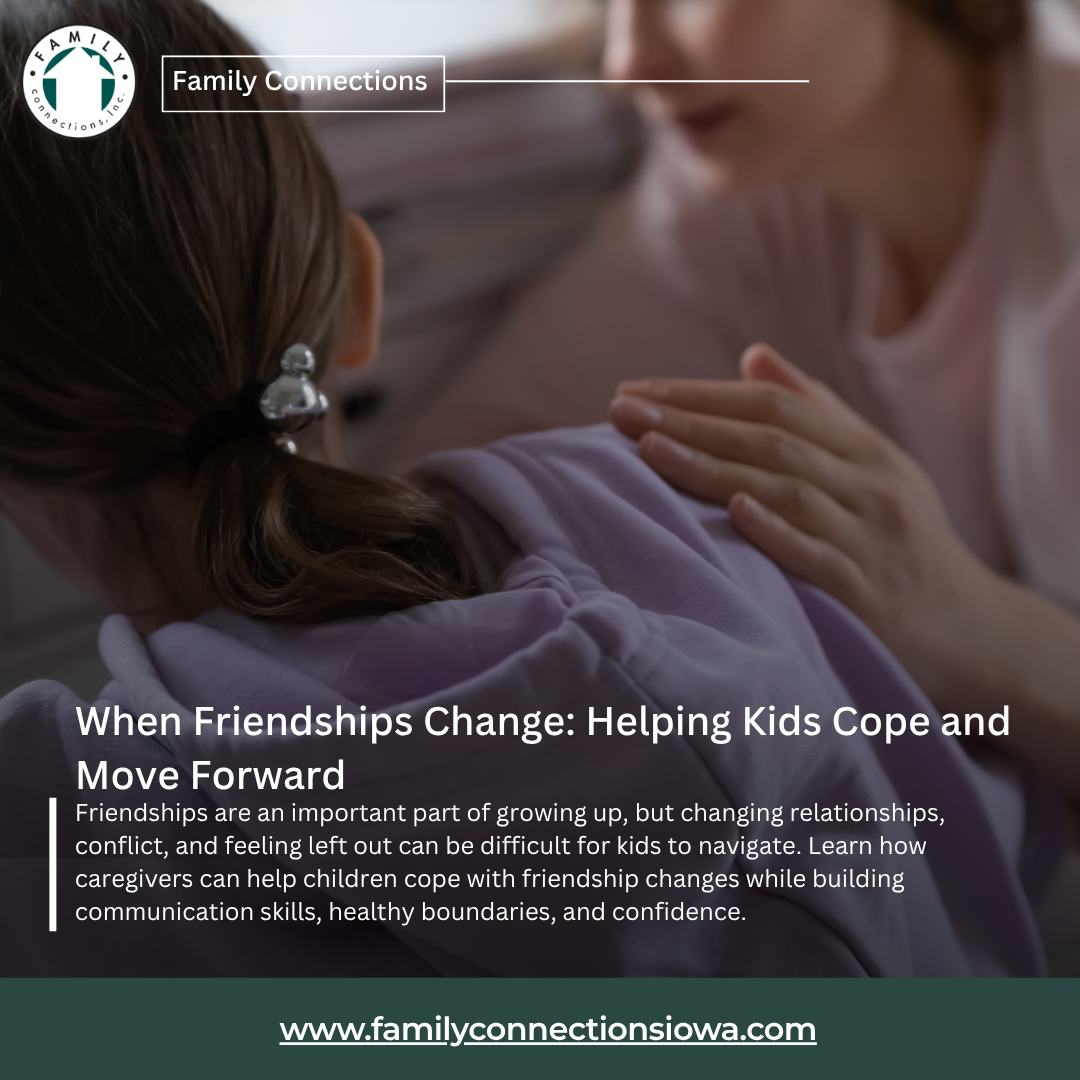
Friendships are an important part of growing up. They give children and teens opportunities to feel connected, learn about themselves, practice communication, and develop social skills. But friendships can also be complicated. Arguments happen, friendships change, and sometimes a friendship ends altogether.
For children and teens, losing a friend can feel like a significant loss. Adults may be tempted to reassure them by saying, “You’ll make new friends” or “It’s not a big deal,” but to a young person, it may feel like a very big deal. Learning how to navigate these experiences is an important part of developing healthy relationships and emotional resilience.
Friendships Are Going to Change
As children grow, their interests, personalities, activities, and social groups change. A best friend in elementary school may not remain a best friend in middle school. A child may become closer to someone new, feel left out of a group, or realize that a friendship no longer feels healthy.
These changes do not necessarily mean that anyone did something wrong. Part of growing up is learning that some relationships change naturally.
Caregivers can help by allowing children to talk about what happened without immediately trying to solve the problem. Asking questions such as, “What was the hardest part about that?” or “What do you wish had happened differently?” can help children identify and process their emotions.
Conflict Doesn’t Always Mean the Friendship Is Over
Disagreements are a normal part of relationships. Children need opportunities to learn that conflict can sometimes be repaired.
Encourage children to practice expressing how they feel without blaming the other person. Instead of saying, “You’re a terrible friend,” they might learn to say, “I felt left out when I wasn’t included.”
Listening is equally important. Healthy friendships require children to recognize that another person may experience the same situation differently.
Caregivers can help children think through questions such as: Is this something we can talk about? Do I need to apologize for something? Is there a compromise? Do we both want to fix the friendship?
Learning Healthy Boundaries
Not every friendship needs to be repaired. Children and teens also need to learn that they are allowed to set boundaries.
Repeated teasing, manipulation, pressure, disrespect, or consistently feeling worse after spending time with someone may be signs that a friendship is not healthy.
Setting a boundary does not have to mean being unkind. It can mean spending less time with someone, saying no to something that feels uncomfortable, communicating what behavior is not okay, or choosing to invest in other friendships.
Teaching children that they can care about someone while still having boundaries is an important relationship skill that can benefit them throughout adulthood.
Coping With Rejection
Being left out or losing a friendship can bring up sadness, anger, embarrassment, jealousy, or questions about self-worth. These emotions are normal.
Rather than trying to immediately make the uncomfortable feelings disappear, caregivers can help children learn that they are capable of experiencing difficult emotions and moving through them.
Encourage healthy outlets such as talking with a trusted person, journaling, engaging in hobbies, participating in activities, exercising, or spending time with supportive friends and family.
It can also help to remind children that one person’s decision not to continue a friendship does not determine their value.
Helping Kids Build Healthy Relationships
Adults can model many of the relationship skills they want children to develop. Children notice how adults handle disagreements, apologize, communicate boundaries, and respond when relationships change.
Friendship struggles can be painful, but they can also provide opportunities to develop communication skills, confidence, empathy, boundaries, and resilience.
If friendship difficulties begin significantly affecting a child’s mood, self-esteem, school attendance, behavior, or daily functioning, additional support may be helpful. Therapy can provide children and teens with a safe space to process relationship changes while building the skills needed to develop healthy connections with others.