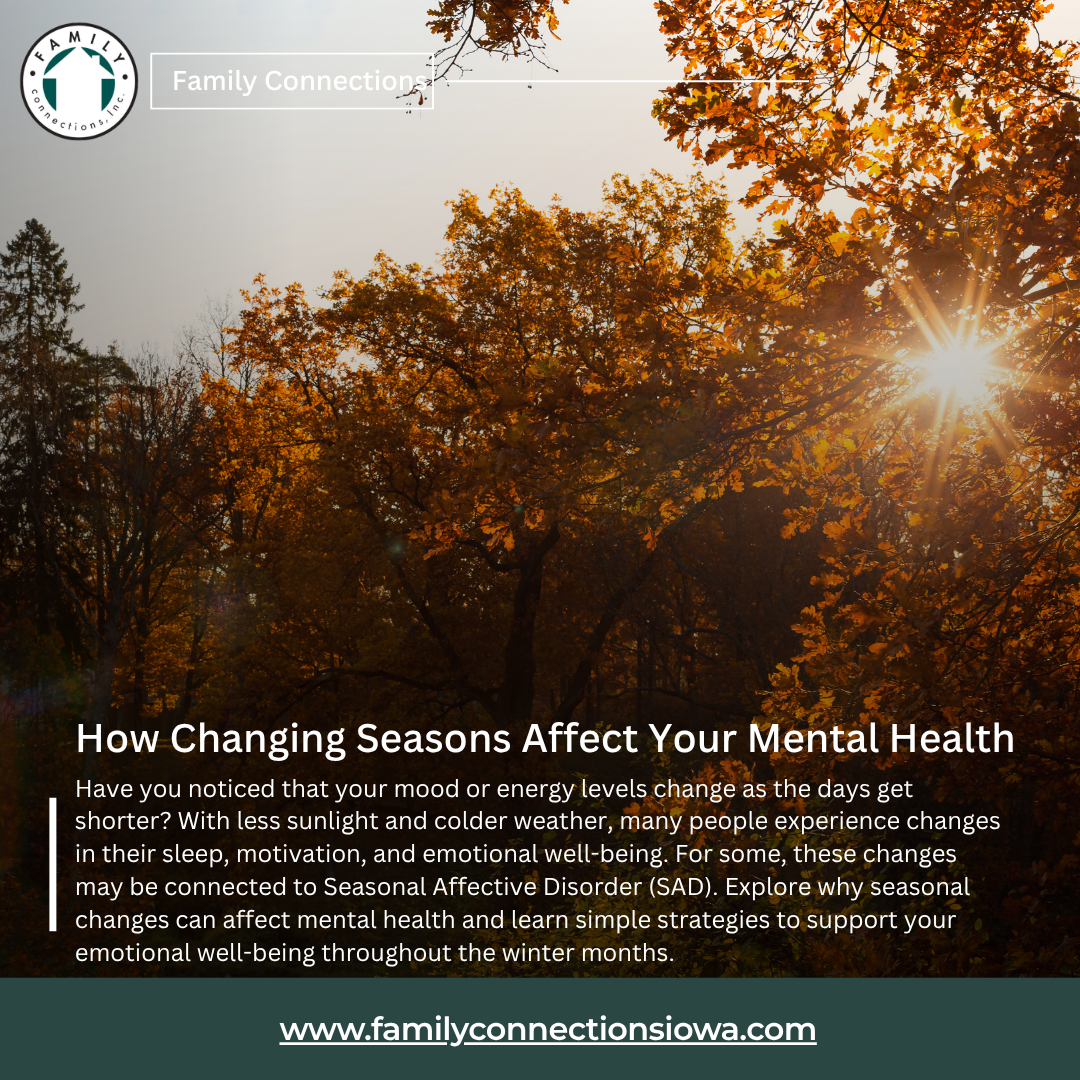
Understanding the Connection Between Seasons and Mental Health
As fall transitions into winter, changes in daylight, temperature, and daily routines can influence our emotional well-being.
Some individuals notice mild changes, such as feeling more tired, having less motivation, or wanting to spend more time indoors. Others may experience persistent sadness, low energy, or difficulty maintaining daily routines.
Understanding how seasonal changes affect mental health can help individuals recognize when additional support may be needed.
Why Does Less Sunlight Affect Our Mood?
Sunlight helps regulate the body’s internal clock, known as the circadian rhythm, which influences sleep and wakefulness.
As daylight decreases, some individuals experience disruptions in their sleep patterns. Seasonal changes may also affect chemicals involved in mood and sleep, including serotonin and melatonin.
These changes can contribute to fatigue, difficulty concentrating, and reduced motivation. However, everyone experiences seasonal transitions differently.
Understanding Seasonal Affective Disorder
Seasonal Affective Disorder (SAD) is a form of depression that follows a recurring seasonal pattern, most commonly beginning during fall or winter and improving in spring.
Common symptoms may include:
- Persistent sadness or low mood.
- Losing interest in previously enjoyable activities.
- Feeling unusually tired or lacking energy.
- Sleeping more than usual.
- Difficulty concentrating.
- Changes in appetite.
- Withdrawing from friends or family.
- Feelings of hopelessness or worthlessness.
Experiencing occasional sadness or fatigue during winter does not automatically indicate SAD. A mental health professional can help determine whether symptoms reflect seasonal depression or another concern.
Practical Strategies for Supporting Your Mental Health
1. Make Time for Natural Light
Spending time outdoors during daylight hours may help support healthy sleep-wake patterns. Even a short walk or spending time in naturally lit environments can be beneficial.
2. Maintain a Consistent Sleep Schedule
Keeping regular sleep and wake times can support healthy sleep patterns. Establishing a relaxing bedtime routine and limiting stimulating activities before bed may also improve sleep quality.
3. Stay Active and Engaged
Colder weather can make it tempting to withdraw from activities. Continuing hobbies, exercising indoors, or participating in enjoyable activities can help maintain motivation and emotional well-being.
4. Maintain Social Connections
Spending time with friends, family, or supportive individuals can help reduce feelings of isolation. Even brief conversations or planned social activities can provide meaningful connection.
5. Practice Self-Compassion
Changes in energy and motivation can sometimes lead to frustration. Rather than criticizing yourself for feeling less productive, recognize that seasonal transitions can affect people differently.
Setting realistic expectations and allowing time for rest can help support emotional well-being.
When Should You Seek Additional Support?
If seasonal mood changes begin interfering with work, relationships, sleep, or daily responsibilities, professional support may be helpful.
Treatment for SAD can include psychotherapy, medication, and light therapy, depending on individual needs. Individuals considering light therapy should consult a qualified healthcare professional to determine whether it is appropriate for them.
Final Thoughts
Shorter days and reduced sunlight can influence emotional well-being in ways that are not always immediately noticeable. Maintaining healthy routines, staying connected with others, and recognizing changes in mood can help individuals navigate seasonal transitions.
At Family Connections, Inc., we recognize that mental health needs can change throughout the year. Our team helps individuals understand their emotional experiences, develop healthy coping strategies, and access support when life’s challenges feel overwhelming.