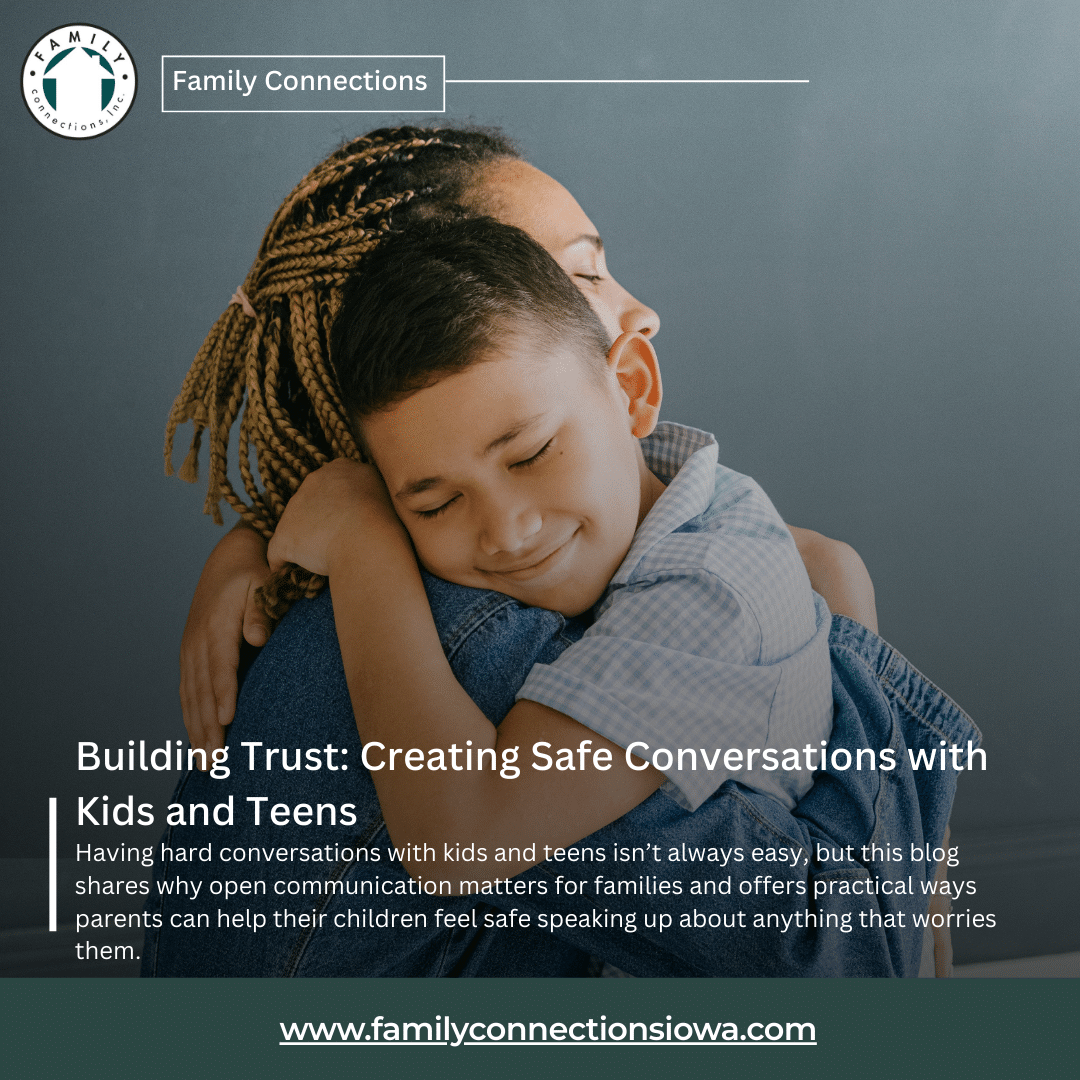
Having hard conversations with kids and teens isn’t always easy. Many parents worry about saying the wrong thing, opening up a topic that feels uncomfortable or not knowing how to respond if their child shares something big. But creating a home built on trust and honesty can make all the difference. When children feel safe talking to the adults in their lives, they’re more likely to share concerns, ask for help and speak up when something doesn’t feel right.
Open communication isn’t about having one “perfect” talk—it’s about building a relationship where conversations can happen naturally, over time and without fear of judgment or punishment.
Why Trust and Honest Conversations Matter
Kids and teens experience stress, confusion, peer pressure, and big emotions just like adults do—but they don’t always have the words or confidence to explain what they’re feeling. If they worry about getting in trouble, being dismissed or not being believed, they may keep things to themselves.
When a child feels safe talking at home, they’re more likely to:
- Share worries before they become overwhelming
- Ask questions about confusing or uncomfortable situations
- Talk about peer conflicts, bullying or stress at school
- Speak up if something doesn’t feel right or if they need help
- Build confidence in their own voice and boundaries
Trust doesn’t mean kids will tell you everything right away. It means they know they can.
Start With Everyday Conversations
Some of the most important conversations don’t start with big speeches—they start with small, everyday moments. Talking in the car, during dinner or while doing an activity together can feel less intense than sitting down for a “serious talk.”
Try:
- Asking open-ended questions like, “How was your day?” or “What was the best and hardest part of today?”
- Being curious instead of jumping straight to problem-solving
- Letting your child talk without interrupting or correcting them right away
- Showing interest in their world, even if the topic seems small to you
These small check-ins build a foundation of connection and trust over time.
Listen More Than You Talk
When kids or teens open up, how we respond matters just as much as what we say. If they feel judged, lectured or dismissed, they may be less likely to share again.
Helpful responses include:
- “I’m really glad you told me that.”
- “That sounds really hard.”
- “Thank you for trusting me with this.”
- “Do you want help solving this, or do you just want me to listen?”
You don’t always need the perfect answer. Sometimes, feeling heard and understood is what matters most.
Stay Calm, Even When It’s Hard
It can be tough to stay calm when your child shares something scary, upsetting, or unexpected. But big reactions—like yelling, panicking or immediately jumping to punishment—can make kids shut down.
If you can, take a breath before responding. You can say:
- “I’m really glad you told me.”
- “Let’s talk about this together.”
- “We’ll figure out what to do next.”
Staying calm helps your child learn that coming to you is safe—even when the topic is difficult.
Make It Clear They Won’t Be in Trouble for Speaking Up
Many kids and teens stay quiet because they’re afraid of consequences or getting someone else in trouble. Let them know that their safety and well-being matter more than anything else.
You can say things like:
- “You won’t get in trouble for telling me something important.”
- “My job is to keep you safe, not to be mad at you.”
- “You can always come to me, even if you’re not sure what to say.”
Repeating this message over time helps build confidence that honesty is welcome.
Keep the Door Open
Not every child will open up right away—and that’s okay. Trust is built through consistency, patience, and showing up again and again.
Ways to keep the door open:
- Check in regularly, even when things seem fine
- Respect their feelings, even if you don’t fully understand them
- Avoid using things they’ve shared against them later
- Let them know you’re available whenever they’re ready to talk
Sometimes kids need time before they’re ready to share something big. What matters is knowing you’re there when they are.
When Extra Support Might Help
If your child or teen seems withdrawn, overwhelmed, anxious, or is having big changes in behavior, extra support can make a difference. Therapy can provide a safe space for kids and teens to talk, learn coping skills and build confidence in expressing their feelings. It can also support parents in learning new ways to communicate and strengthen connection at home.
Building trust and open communication is one of the most powerful ways to support your child’s emotional health and safety. You don’t have to do it perfectly—you just have to keep showing up, listening and letting your child know they’re not alone.
If your family could benefit from extra support, Family Connections is here to help. We offer therapy, BHIS services and medication management for children, teens, adults and families across our locations.