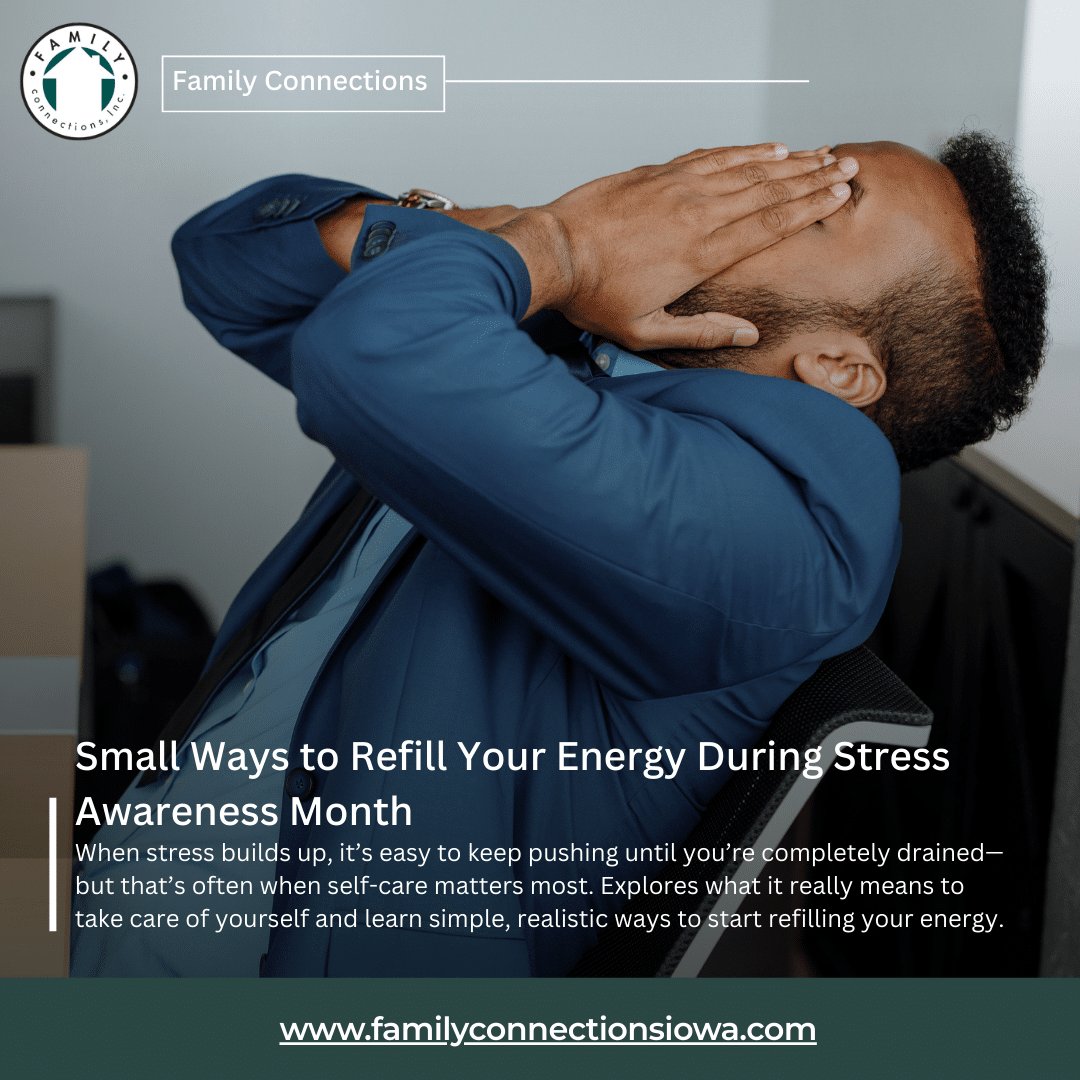
When stress builds up, it’s easy to keep pushing through your days on empty. Many people tell themselves they’ll rest “later,” after one more task or one more busy week. But when your tank is on E, that’s often when self-care matters most. Stress Awareness Month is a good reminder that taking care of yourself doesn’t have to be complicated or time-consuming—it just has to be intentional.
Self-care isn’t about perfection or doing everything right. It’s about noticing when you’re running low and giving yourself small chances to recharge.
What It Really Means to Be “Running on Empty”
Feeling drained doesn’t always look dramatic. Sometimes it shows up as:
- Feeling irritable or overwhelmed
- Having trouble focusing or staying motivated
- Feeling tired even after sleeping
- Losing interest in things you usually enjoy
- Feeling like everything takes more effort than it should
When stress sticks around for too long without relief, your mind and body start to feel it. That’s your cue that it’s time to slow down and refill, even a little.
Self-Care Doesn’t Have to Be Big
One of the biggest myths about self-care is that it has to be expensive, time-consuming or Instagram-worthy. In reality, small, simple choices can make a real difference—especially when you’re already exhausted.
Here are some realistic ways to start refilling your energy:
- Step outside for a few minutes. Fresh air and sunlight can help reset your mood and energy.
- Drink some water and eat something nourishing. It sounds basic, but stress can make us forget the basics.
- Take a short break from screens. Even 10 minutes without scrolling or notifications can help your mind rest.
- Do one small, kind thing for yourself. Stretch, listen to a song you love, or sit quietly for a few minutes.
- Lower the bar for the day. Not every day has to be productive to be meaningful.
These small actions may not fix everything, but they can help you feel a little more steady and supported.
Make Rest Part of Your Routine
Rest isn’t a reward you earn—it’s something your body and mind need to function well. If you only rest when you’re completely burned out, it’s much harder to recover.
Try to:
- Protect your sleep as much as possible
- Build short breaks into your day
- Give yourself permission to pause without feeling guilty
- Notice what drains you and what helps you recharge
Over time, these small changes can help prevent stress from building up to the point of total exhaustion.
Pay Attention to What You’re Carrying
Sometimes what drains us most isn’t just our schedule—it’s what we’re holding inside. Worries, pressure, grief, or feeling like you have to do everything alone can all add weight to your emotional load.
It can help to:
- Talk to someone you trust about how you’re really doing
- Write down what’s been weighing on you
- Ask for help with something, even if it feels hard
- Remind yourself that you don’t have to carry everything by yourself
Letting some of that weight out can create space for relief and energy to return.
When Stress Feels Like Too Much
If stress feels constant, overwhelming, or starts to affect your sleep, mood, or daily functioning, it may be time for extra support. Therapy can help you learn coping skills, set healthier boundaries, and find ways to manage stress that actually fit your life.
At Family Connections, we support children, teens, adults, and families in managing stress, burnout, and emotional overwhelm. Stress Awareness Month is a great reminder that your well-being matters—and that it’s okay to ask for help when your tank is running low.