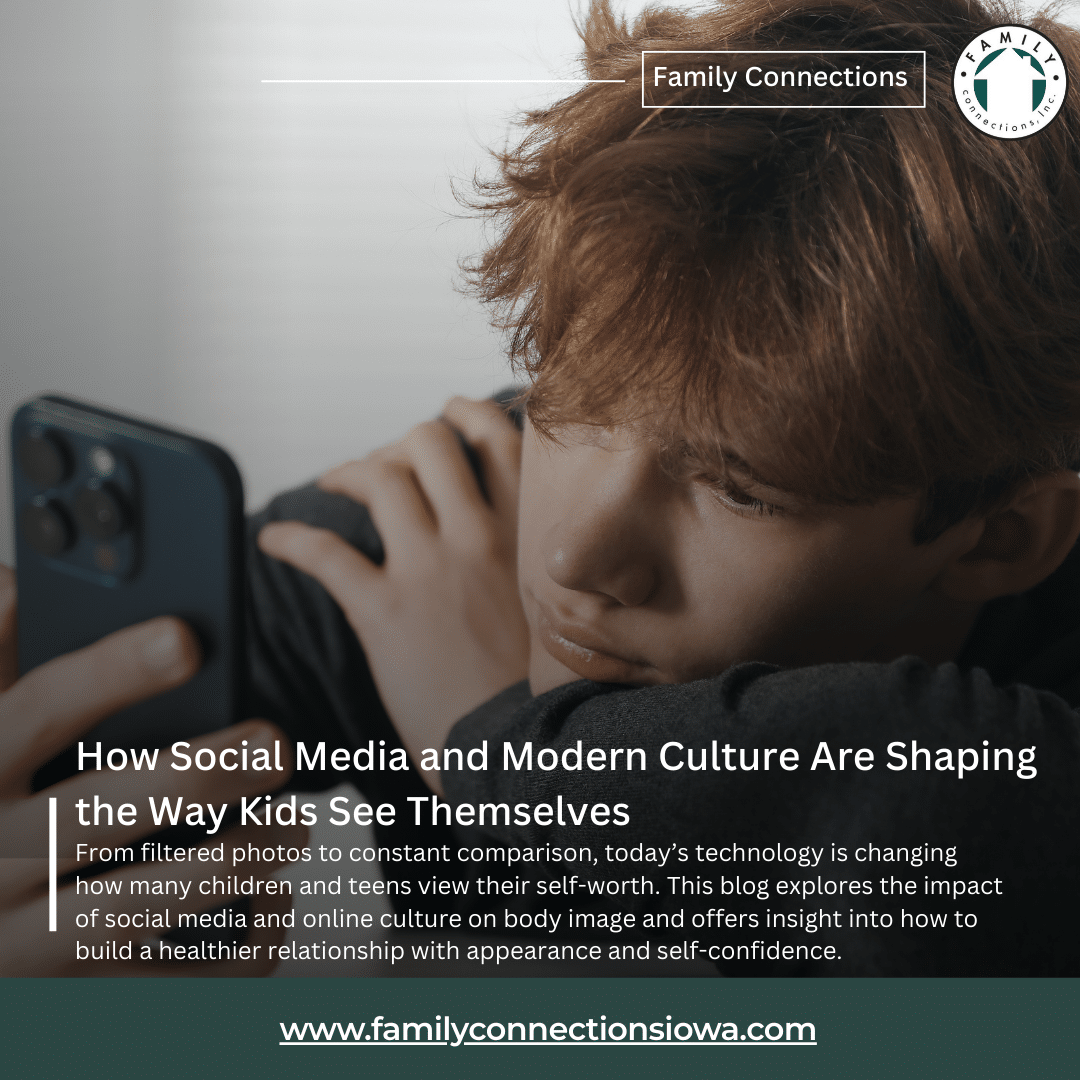
From filtered photos to constant comparison, today’s technology is changing how many children and teens view their bodies and self-worth. Social media, videos, and online trends are everywhere—and while they can be fun and creative, they can also quietly shape how young people think they should look, act and live. For many kids and teens, this can lead to increased pressure, self-doubt, and unrealistic expectations.
Understanding how modern culture impacts body image is an important step in helping young people build a healthier more confident relationship with themselves.
The Pressure to Compare
Social media makes it easy to compare our lives to others—especially when what we’re seeing is often carefully edited, filtered or staged. Kids and teens may scroll through images that show “perfect” bodies, flawless skin or exciting lifestyles and start to believe that this is what they’re supposed to look like or achieve.
Over time, constant comparison can:
- Lower self-esteem
- Increase anxiety about appearance
- Create pressure to look or act a certain way
- Make normal bodies and normal lives feel “not good enough”
Even when kids know that photos are edited, it can still be hard not to compare themselves.
Filters, Editing, and Unrealistic Standards
Filters and editing tools can change how people look in just a few taps. While this can be fun, it can also blur the line between what’s real and what isn’t—especially for young minds that are still developing their sense of identity.
When kids and teens see mostly edited images, they may start to:
- Feel unhappy with their natural appearance
- Believe they need to change themselves to be accepted
- Focus more on how they look than how they feel
- Tie their worth to likes, comments, or views
These messages can quietly shape how they see themselves and their value.
How This Impacts Mental Health
Body image struggles don’t exist in a vacuum. They’re often connected to bigger emotional challenges, like anxiety, depression or low self-confidence. For some kids and teens, negative self-image can lead to:
- Withdrawing from activities they used to enjoy
- Avoiding social situations
- Being overly critical of themselves
- Changes in eating or exercise habits
- Feeling like they’re never “enough”
The pressure to look a certain way can become exhausting and overwhelming.
What Parents and Caregivers Can Do
You don’t have to ban social media to make a difference. What matters most is helping kids and teens build strong, realistic and compassionate views of themselves.
Some helpful steps include:
- Talking openly about how social media images are often edited or staged
- Encouraging kids to follow accounts that promote realistic, diverse bodies
- Focusing praise on effort, kindness and strengths—not just appearance
- Modeling healthy self-talk about your own body and self-worth
- Creating space for kids to talk about how social media makes them feel
These conversations help kids learn to question what they see instead of automatically believing it.
Building a Healthier Relationship With Self-Image
A healthy body image isn’t about loving how you look all the time—it’s about respecting your body and knowing your worth isn’t based on appearance. Kids and teens benefit from learning that:
- Bodies come in many shapes and sizes
- Change is a normal part of growing up
- Their value comes from who they are, not how they look
- It’s okay to take breaks from social media when it feels overwhelming
Helping young people build confidence in who they are, not just how they look, gives them tools they can use for life.
When Extra Support Can Help
If your child or teen seems stuck in negative self-talk, is constantly comparing themselves to others, or is showing signs of anxiety, depression or low self-esteem, extra support can make a big difference. Therapy can help kids and teens explore where these thoughts come from, build healthier coping skills and strengthen their self-confidence.
At Family Connections, we support children, teens, and families in navigating challenges related to self-esteem, body image, anxiety and more. If you have concerns about your child or teen, we’re here to help.